AI-Powered Application Modernization

Modernize applications for faster, smarter business operations

tkxel provides application modernization services to growing businesses with AI-assisted discovery, cloud-native architecture,
secure integrations, workflow automation, and scalable engineering practices.

AWARDS

Awards Logo 1
Awards Logo 2
Awards Logo 3
Awards Logo 4

Legacy applications are not ready for AI adoption

Many businesses want to introduce AI agents, automation, or intelligent search, but their existing applications lack the architecture, data access, APIs, and security controls needed to support AI use cases.

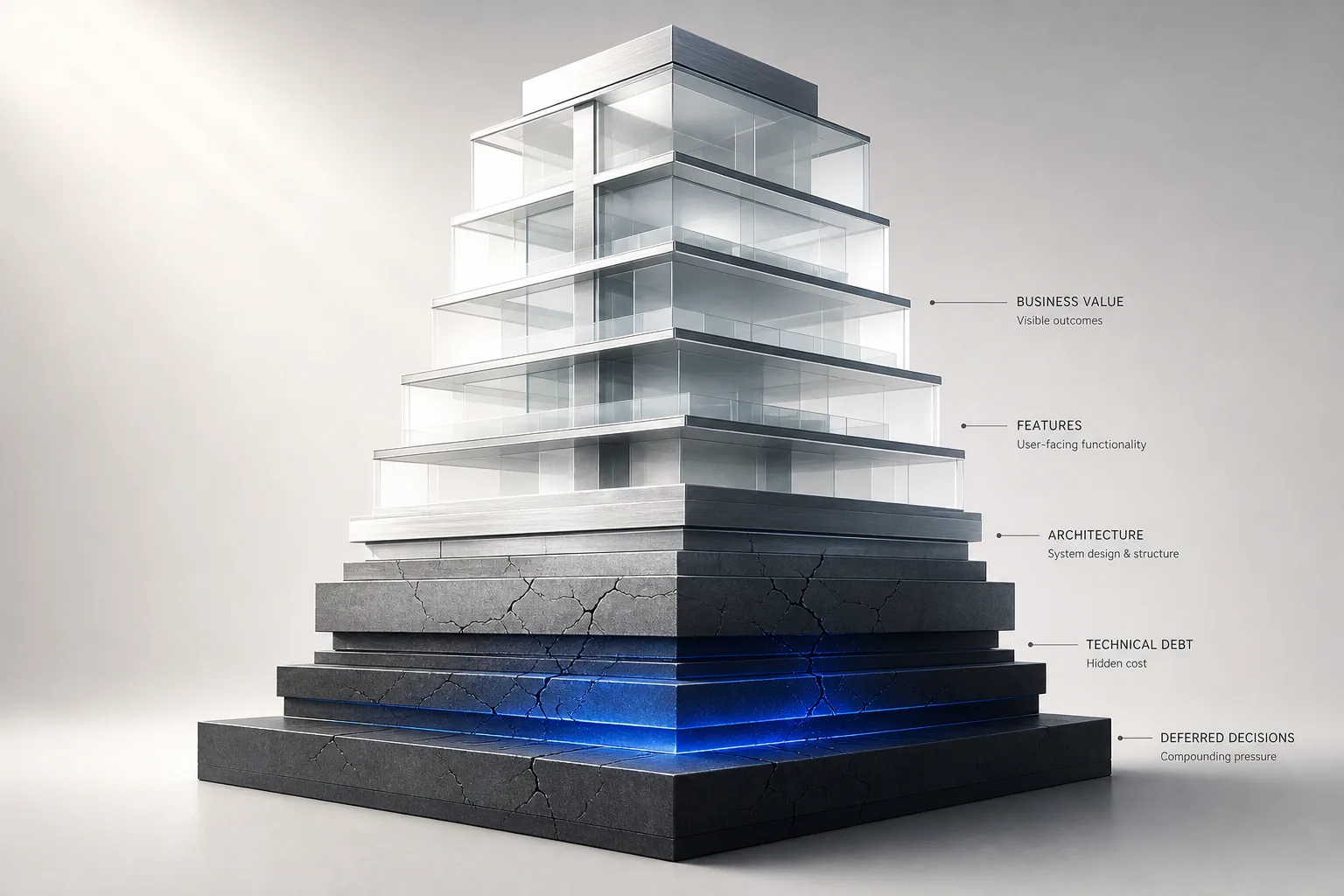
Technical debt slows down innovation and delivery

Outdated codebases, poor documentation, fragile dependencies, and manual release processes make every change slower, riskier, and more expensive, limiting the team’s ability to modernize confidently.

Disconnected systems create data and workflow bottlenecks

Legacy applications often rely on siloed databases, outdated integrations, and manual handoffs, making it difficult to automate workflows, connect business systems, or generate reliable insights.

Modernization feels risky for lean teams

Growing businesses need to improve critical applications without disrupting daily operations, but unclear priorities, migration risks, limited engineering capacity, and fear of downtime often delay modernization.

AI-powered modernization services for growing businesses

AI-Powered Application Modernization

Application modernization assessment

Assess your legacy systems, application architecture, codebase, integrations, data flows, security posture, and business workflows to identify what should be modernized, migrated, refactored, or replatformed first. A discovery workshop can help clarify this scope before the assessment begins.
blue arrow

AI-Powered Application Modernization

AI-assisted legacy code analysis

Use AI-supported analysis to understand legacy code, dependencies, business logic, documentation gaps, .NET applications, and selected legacy technologies such as COBOL or VB6 where relevant.
blue arrow

AI-Powered Application Modernization

Application refactoring and reengineering

Improve outdated applications by reducing technical debt, simplifying business logic, and making systems easier to maintain without a full rebuild.
blue arrow

AI-Powered Application Modernization

Cloud-native application modernization

Move legacy applications toward cloud-native architecture using containers, managed services, microservices, APIs, and scalable infrastructure patterns.
blue arrow

AI-Powered Application Modernization

Data and integration modernization

Modernize databases, APIs, ETL workflows, integration layers, and event-driven data flows so applications can support automation, analytics, and AI use cases.
blue arrow

AI-Powered Application Modernization

AI workflow enablement

Prepare applications to support AI agents, copilots, intelligent search, workflow automation, decision support, and AI-powered user experiences.
blue arrow

AI-Powered Application Modernization

UX and frontend development

Redesign outdated interfaces to reduce friction, improve usability, simplify workflows, and make applications easier for teams and customers to use.
blue arrow

AI-Powered Application Modernization

DevOps and delivery modernization

Improve release speed and reliability with CI/CD pipelines, automated testing, infrastructure as code, observability, and modern deployment practices.
blue arrow

AI-Powered Application Modernization

Security and compliance integration

Strengthen applications with modern identity, access controls, encryption, secure APIs, DevSecOps practices, audit readiness, and compliance-aligned controls.
blue arrow
offer right arrow
offer left arrow

tkxel helps mid-market teams reduce technical debt, improve system performance, prepare applications for AI while modernizing in controlled phases.

From legacy business systems to AI-native development

01

active-imagestep-imagestep-imagestep-imagestep-image
01

Discover and assess

The engagement starts with a review of your application landscape, legacy systems, architecture, codebase, integrations, data flows, user workflows, cloud readiness, security gaps, and business priorities. This review is typically the starting point for a wider digital transformation effort.

Deliverables: Application assessment, technical debt map, architecture gap analysis, AI-readiness review, modernization priority matrix

02

Define the modernization roadmap

Each modernization path is prioritized based on what should be refactored, replatformed, rearchitected, replaced, integrated, automated, or migrated according to business value, risk, effort, dependencies, and operational impact.

Deliverables: Modernization roadmap, target-state architecture, dependency map, risk assessment, phased execution plan

03

Modernize in controlled phases

Modernization moves forward through incremental, low-risk workstreams, including code refactoring, cloud migration, monolith to microservices migration, API modernization, data pipeline updates, UX improvements, and workflow automation.

Deliverables: Modernized components, release wave plan, migration playbooks, integration updates, application improvement backlog

04

Enable AI-ready modernization

Applications are prepared to support AI use cases through improved data access, API integrations, automation hooks, intelligent workflows, and GenAI-assisted code conversion where it can safely accelerate modernization.

Deliverables: AI-ready architecture components, data access layer, automation workflows, integration patterns, governance and security controls

05

Test, validate, and optimize

We validate performance, security, reliability, usability, integrations, and business workflows before rollout, then optimize for scale and maintainability.

Deliverables: Test reports, performance benchmarks, security validation, deployment plan, optimization roadmap

From legacy business systems to AI-native development

gain

Improve application performance across the business

Accelerate product updates and releases

Reduce delays caused by outdated code, fragile dependencies, and manual deployment processes so teams can deliver improvements faster and more consistently.

Lower application maintenance costs

Reduce technical debt, simplify complex systems, and replace inefficient infrastructure to decrease the time and resources required to maintain critical applications.

Improve performance and operational reliability

Modernize architecture, integrations, and infrastructure to improve application speed, stability, scalability, and availability across growing workloads.

Prepare applications for AI and automation

Create the APIs, data access, security controls, and workflow foundations needed to introduce AI agents, intelligent search, decision support, and process automation.

Connect systems and streamline workflows

Modernize APIs, integrations, and data flows to reduce manual handoffs, remove operational bottlenecks, and keep information moving reliably across business systems.

See what modernization could improve

Assess my applications
Solution Section (1)

Build faster applications with AI

Business-first modernization roadmap

We help you identify which applications, workflows, integrations, and technical debt areas matter most before investing in full modernization.

AI-assisted discovery and planning

We use AI-supported analysis to speed up code understanding, dependency mapping, documentation review, backlog creation, and modernization planning.

Low-risk phased execution

We modernize applications in controlled phases so your business can keep running while systems are improved, migrated, or re-architected.

Architecture that supports AI and automation

We design applications, APIs, data flows, and cloud foundations that can support AI agents, intelligent workflows, analytics, and modern integrations.

Tools & Technologies Section

  • Cloud platforms & infrastructure
  • Containerization & orchestration
  • Development & automation tools
  • Microservices & AI integration

AWS

aws

Microsoft Azure

azure

Google Cloud Platform (GCP)

gcp

Terraform

terraform

Cloudflare

cloudfare

IBM Cloud

ibm-cloud

Oracle Cloud

oracle

Docker

docker

Kubernetes

kubernates

Helm

helm

Prometheus

Prometheus 1

Jenkins

Jenkins

GitLab CI/CD

gitlab

CircleCI

circleci


Ansible

ansible

SonarQube

sonarqube

GitHub Actions

git-hub-actions

Spring Boot

springboot

Kafka

logo=kafka

TensorFlow

tensorflow-ar21

AWS SageMaker

logo=aws sagemaker

PyTorch

pytorch

We’ve been recognized by the best, year after year

AMERICA’S FASTEST GROWING COMPANY

AMERICA’S FASTEST GROWING COMPANY

Top 15 inspiring workplaces for 2026

Top 15 inspiring workplaces for 2026

titan business PLATINUM award AI & AUTOMATION

titan business PLATINUM award   AI & AUTOMATION

FINANCIAL TIMES

FINANCIAL TIMES

mogul people leader

mogul people leader

FORBES COACHES COUNCIL

FORBES COACHES COUNCIL

ISO 27001 CERTIFIED

ISO 27001 CERTIFIED

ISO 20000 CERTIFIED

ISO 20000 CERTIFIED

ISO 9001 CERTIFIED

ISO 9001 CERTIFIED

CMMI DEV 3 CERTIFIED

CMMI DEV 3 CERTIFIED

The Financial Case for Modernization

Modernization decisions are ultimately financial decisions. Beyond code quality and architecture, leadership teams want to know how a project affects total cost, risk exposure, and return over time.

This section speaks directly to that lens, covering the strategic, cost, and risk questions that shape a modernization business case.

Choosing the Right Modernization Path

Not every legacy application needs a rebuild. Six proven paths exist, each with a different cost and risk profile. Matching the right application to the right path is often the single biggest driver of project economics.

Approach What It Means Typical Cost Impact
Rehost Move the application to the cloud as is (lift and shift) Lowest upfront cost, fastest timeline
Replatform Minor cloud optimizations without changing core code Low to moderate
Refactor Restructure code for efficiency and maintainability Moderate
Rearchitect Redesign the application for cloud-native performance Moderate to high
Rebuild Redevelop the application from scratch High, long-term value
Replace Retire the application in favor of a SaaS or COTS product Variable, often lowest long-term overhead

Rehosting is frequently the fastest way to exit expensive data centers and stop the clock on rising infrastructure spend, even before a longer term rearchitecture plan is finalized.

Serverless and Hybrid Cloud Economics

Serverless computing removes the cost of provisioning and maintaining idle infrastructure, since compute is billed only when workloads actually run. For variable or event driven workloads, this can meaningfully lower operating cost.

Many organizations are not choosing between on premises and public cloud outright. A hybrid or multi cloud strategy lets regulated, latency sensitive, or legacy dependent workloads stay in place while other workloads move to the cloud, spreading risk and cost across environments.

Total Cost of Ownership and Return on Investment

A modernization business case should account for more than the project budget. Total cost of ownership captures licensing, infrastructure, maintenance, and support costs across the full life of the application, not just the initial build.

Return on investment framing then connects that cost picture to measurable outcomes such as reduced downtime, faster release cycles, lower support headcount needs, and improved system scalability. Together, these two lenses turn a technical roadmap into a financial one that stakeholders can approve with confidence.

Portfolio Rationalization

Large organizations rarely modernize one application in isolation. Application portfolio rationalization looks across the entire estate to decide what should be modernized, consolidated, or retired altogether.

This exercise often uncovers redundant systems and unused licenses long before any code is touched, delivering savings well ahead of the modernization project itself.

Protecting Data Through Migration

Moving an application also means moving its data, and that step carries its own risk. Data mapping, lineage tracking, and validation checks are used to confirm that nothing is lost, duplicated, or corrupted during the move.

Governance controls applied during migration also help satisfy audit and compliance requirements that finance and risk teams are typically accountable for.

Platform Coverage Beyond the Common Stack

Legacy estates are rarely limited to COBOL, VB6, or .NET. Broader platform experience matters when planning a business wide modernization roadmap.

Legacy Environment Common Modernization Path
IBM i and IBM Z Rehost or replatform to cloud infrastructure
UniVerse and similar multivalue databases Data migration with schema redesign
Unix to Linux Replatform with minimal application change
VMware-based estates Containerization and cloud rehosting
Java applications Refactor or rearchitect for cloud-native deployment

Reducing Downtime Risk

Unplanned downtime carries a direct cost in lost revenue and customer trust. Two techniques are commonly used to keep modernization changes low risk:

Blue green deployment, which runs old and new versions in parallel and shifts traffic only once the new version is verified
Feature flags, which allow new functionality to be turned on gradually and rolled back instantly if issues appear

Business rules mining is also used to extract embedded logic from legacy code before rebuilding it, reducing the chance that critical business logic is lost or misinterpreted during the rewrite.

The Cost of Legacy Skills

Systems built on older languages and platforms increasingly depend on a shrinking pool of specialists. As that talent retires, the cost and risk of maintaining legacy systems in house rises steadily.

This skills gap is one of the most underestimated cost drivers in a modernization decision, since it often shows up as rising contractor rates or emergency support costs rather than a single visible line item.

When Replacing Makes More Sense Than Rebuilding

Not every legacy application deserves a rebuild. If a mature SaaS or commercial off the shelf product already covers the same functionality, replacing the application can be faster and cheaper than modernizing it.

This path also shifts ongoing maintenance and security responsibility to the vendor, which can reduce internal support costs over time.

What Drives Modernization Cost

Modernization budgets vary widely, and several factors typically explain why:

  • Size and complexity of the existing codebase
  • Volume and sensitivity of data being migrated
  • Level of custom business logic embedded in the system
  • Integration dependencies with other applications
  • Compliance and security requirements specific to the industry
  • Chosen modernization path, from rehost through rebuild

Signs an Application Needs Modernization

Certain patterns tend to signal that a legacy application is becoming a financial liability rather than a business asset:

  • Maintenance and support costs climbing year over year
  • Frequent outages or performance issues under normal load
  • Inability to scale during peak demand periods
  • Growing dependence on a small number of specialists to keep the system running
  • New features taking significantly longer to ship than they used to

Modernization is ultimately about turning legacy technology into a more sustainable business asset. By choosing the right modernization path, controlling migration risk, reducing technical and skills-related costs, and measuring ROI, organizations can modernize with greater confidence while building a stronger foundation for future growth.

Ready to Elevate Military and Defense with AI?

Let’s explore how AI agents can help you move faster and smarter.

Build an AI-ready application roadmap your business can execute

Clutch

“tkxel completely transformed the way we manage our customer relationships. Their customized CRM system streamlined our processes and improved customer satisfaction. We highly recommend their services to any business looking for real results.”

Nick Drogo

Nick Drogo

Global Director IT, Knowles

“They helped us build a docketing app with an intuitive user interface, allowing our attorneys to track over 10,000 U.S. and international patent systems.”

Robert K Burger

Robert K Burger

COO, Sterne Kessler

“tkxel has proven beyond par that they excel not just in building and integrating with our team but building at a level that is at par with any US development team. Working with tkxel is one of the best decisions we have made.”

Umair Bashir

Umair Bashir

CTO, Replenium

“tkxel shared our vision right from the get go, and helped us achieve the unthinkable through perseverance and a thorough attention to detail. Their team was highly professional and possessed a firm grasp on technicalities, a combination that is hard to find in the industry.”

Pam Chitwood

Pam Chitwood

Product Manager, ABB

Invalid email address

loader

“tkxel completely transformed the way we manage our customer relationships. Their customized CRM system streamlined our processes and improved customer satisfaction. We highly recommend their services to any business looking for real results.”

Nick Drogo

Nick Drogo

Global Director IT, Knowles

“They helped us build a docketing app with an intuitive user interface, allowing our attorneys to track over 10,000 U.S. and international patent systems.”

Robert K Burger

Robert K Burger

COO, Sterne Kessler

“tkxel has proven beyond par that they excel not just in building and integrating with our team but building at a level that is at par with any US development team. Working with tkxel is one of the best decisions we have made.”

Umair Bashir

Umair Bashir

CTO, Replenium

“tkxel shared our vision right from the get go, and helped us achieve the unthinkable through perseverance and a thorough attention to detail. Their team was highly professional and possessed a firm grasp on technicalities, a combination that is hard to find in the industry.”

Pam Chitwood

Pam Chitwood

Product Manager, ABB

Frequently asked questions

What are application modernization services?

faq plus faq minus

Application modernization services help businesses update legacy applications, reduce technical debt, improve performance, strengthen security, and prepare systems for cloud, AI, automation, and long-term scale.

What is legacy application modernization?

faq plus faq minus

Legacy application modernization is the process of improving outdated applications by refactoring code, updating architecture, modernizing integrations, migrating to cloud platforms, or rebuilding selected components without disrupting daily operations.

Do you provide legacy system modernization services?

faq plus faq minus

Yes. tkxel provides legacy system modernization services for applications, databases, integrations, workflows, and infrastructure. We help assess what should be refactored, replatformed, rearchitected, replaced, or migrated based on business value and risk.

Can tkxel support mainframe modernization?

faq plus faq minus

Yes. tkxel can support mainframe modernization by assessing legacy systems, business logic, dependencies, data flows, integration needs, and migration options. This may include phased migration, API enablement, code conversion, or replatforming depending on the system.

Do you modernize COBOL/VB6 applications?

faq plus faq minus

Yes. tkxel can help assess and modernize COBOL/VB6 applications by analyzing legacy code, documenting business logic, identifying dependencies, and planning a low-risk modernization path using refactoring, migration, or GenAI-assisted code conversion where appropriate.

What is monolith to microservices modernization?

faq plus faq minus

Monolith to microservices modernization breaks a large, tightly connected application into smaller services that are easier to scale, maintain, deploy, and improve. tkxel can use incremental approaches such as the strangler fig pattern to reduce migration risk.

Do you provide code refactoring services?

faq plus faq minus

Yes. Our code refactoring services help improve maintainability, performance, security, and scalability without fully rebuilding the application. Refactoring is often used to reduce technical debt and prepare applications for cloud-native rearchitecture or AI-enabled workflows.

What is .NET application modernization?

faq plus faq minus

.NET application modernization helps businesses upgrade older .NET applications, improve architecture, update frameworks, modernize APIs, improve security, migrate workloads, and prepare applications for cloud, containers, microservices, and modern DevOps practices.

What are replatforming services?

faq plus faq minus

Replatforming services move applications to a modern runtime, cloud platform, container environment, or managed infrastructure with limited changes to core functionality. It is often a faster, lower-risk option than a full rebuild.

How does legacy software migration work?

faq plus faq minus

Legacy software migration moves applications, data, integrations, or infrastructure from outdated systems to modern platforms. tkxel plans migration in controlled phases to reduce downtime, protect business continuity, and support cost-reducing modernization.

How does AI help with application modernization?

faq plus faq minus

AI can accelerate modernization by supporting code analysis, dependency mapping, documentation review, automated code translation, test generation, and GenAI-assisted code conversion. Human engineering oversight is still used to validate quality, security, and business logic.

What is cloud-native rearchitecture?

faq plus faq minus

Cloud-native rearchitecture redesigns applications to use modern cloud patterns such as microservices, containers, APIs, managed services, observability, and automated deployment pipelines. It helps applications become more scalable, resilient, and easier to maintain.

Is AI-powered application modernization low-risk?

faq plus faq minus

It can be when done incrementally. tkxel uses phased modernization, risk assessment, dependency mapping, refactoring, replatforming, and controlled release planning so businesses can modernize applications without disrupting daily operations.

How do I know what to modernize first?

faq plus faq minus

tkxel starts with an application modernization assessment to review legacy systems, technical debt, business workflows, integrations, AI-readiness gaps, and operational impact. The output is a prioritized roadmap showing what to fix, migrate, refactor, or replatform first.

Upcoming Webinar

FinOps for AI Workflows: Controlling Cloud Costs for Businesses

August 12, 2026 10:00 am EST

00 Days
00 Hours
00 Minutes
00 Seconds